

DISCOVER WRANGELL | STATE HISTORIC PARK
PETROGLYPH
BEACH
Accessible boardwalk and viewing deck, beach reached from the deck
CARVINGS
40+ PETROGLYPHS
Highest concentration in Southeast Alaska
WHERE
Half a mile from the ferry terminal
ACCESS
WHERE TO GO
Low tide. Check the tide before heading over.
SOME OF THE FINEST SURVIVING EXAMPLES OF ANCIENT NATIVE ARTISTIC EXPRESSION IN SOUTHEAST ALASKA
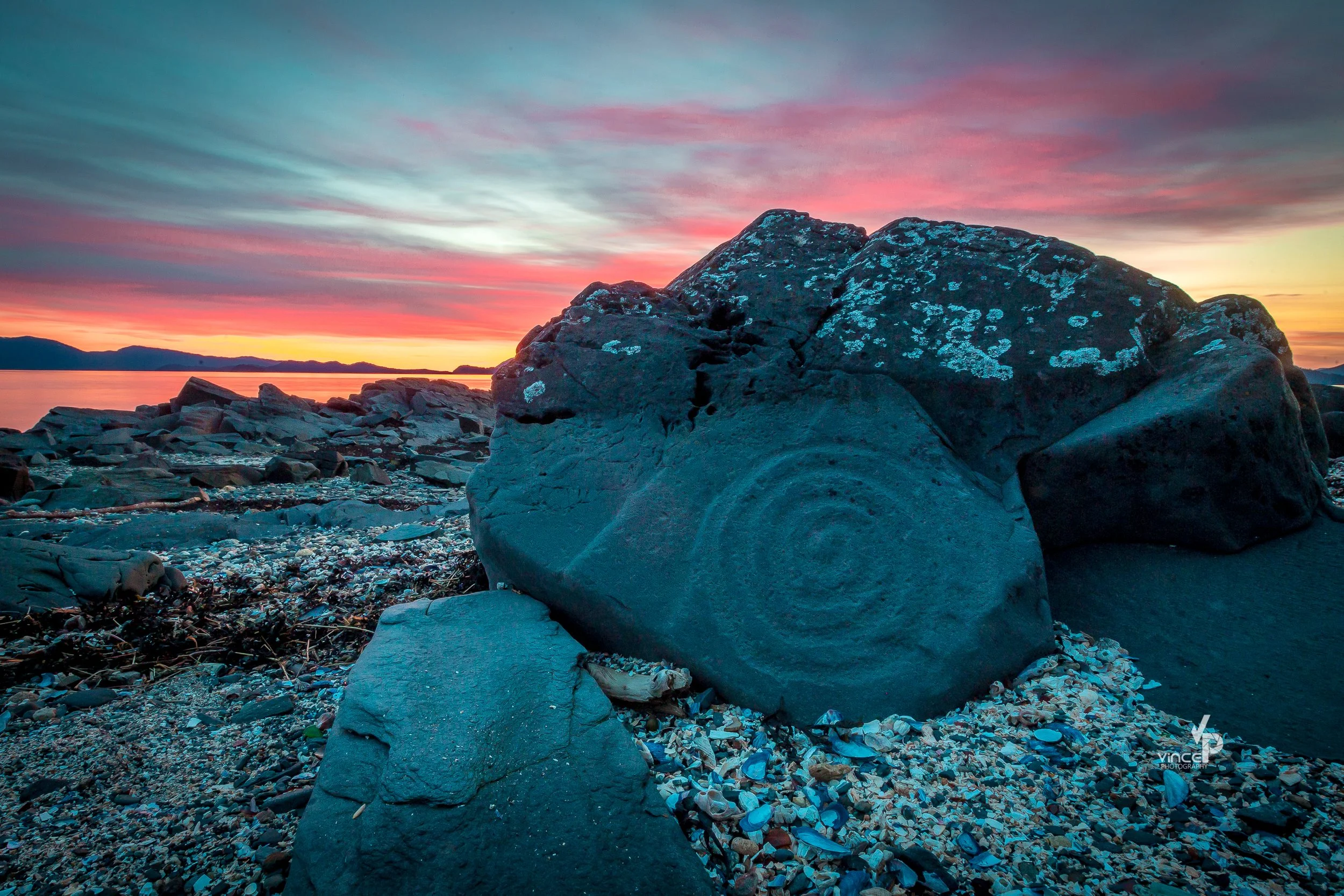
The term “petroglyph” is derived from the Greek words “petra” (rock) and “glyphe” (carving), perfectly describing these intricate designs and symbols meticulously carved into rocks. Typically found on shores just above or below the high tide line, petroglyphs are often located near important salmon streams, habitation sites, or historic waypoints.
40+
2000
2
1/2
PETROGLYPHS ON THE BEACH
DESIGNATED A STATE HISTORIC PARK
CARVINGS REDISCOVERED DURING CONSTRUCTION
MILE FROM THE FERRY TERMINAL
THE PARK
Wrangell’s Petroglyph Beach boasts the highest concentration of petroglyphs in Southeast Alaska and offers easy access for exploration. In 2000, the beach was designated a State Historic Park, complete with an accessible boardwalk and a viewing deck overlooking Petroglyph Beach, the Stikine River, and Zimovia Straits. Replicas of several petroglyph designs are displayed on the deck, allowing visitors to make rubbings, while the beach itself is directly accessible from the deck overlook.
During the construction of the interpretive facility, two previously unknown petroglyphs were unearthed, one of which had long been thought lost. This rediscovery was celebrated by the local Tlingit community and Wrangell residents alike.

WHAT THEY MEAN
Although the true intent and meaning of these petroglyphs remain a mystery, they are believed to serve various purposes, from marking significant events, victories, or territorial claims to being used in religious or shamanistic rituals. Alternatively, they may simply be the artistic expressions of the Tlingit or visiting Tsimshian people.
FINDING THEM
Petroglyph Beach is located just half a mile from the Wrangell ferry terminal, making it easily accessible to visitors. Most of the iconic symbols are found to the right, toward a tidal outcropping, as you step onto the sand. With over 40 petroglyphs to discover, including the unique whale petroglyph, visitors are encouraged to document their experience with photographs and step lightly to help preserve this cultural treasure.
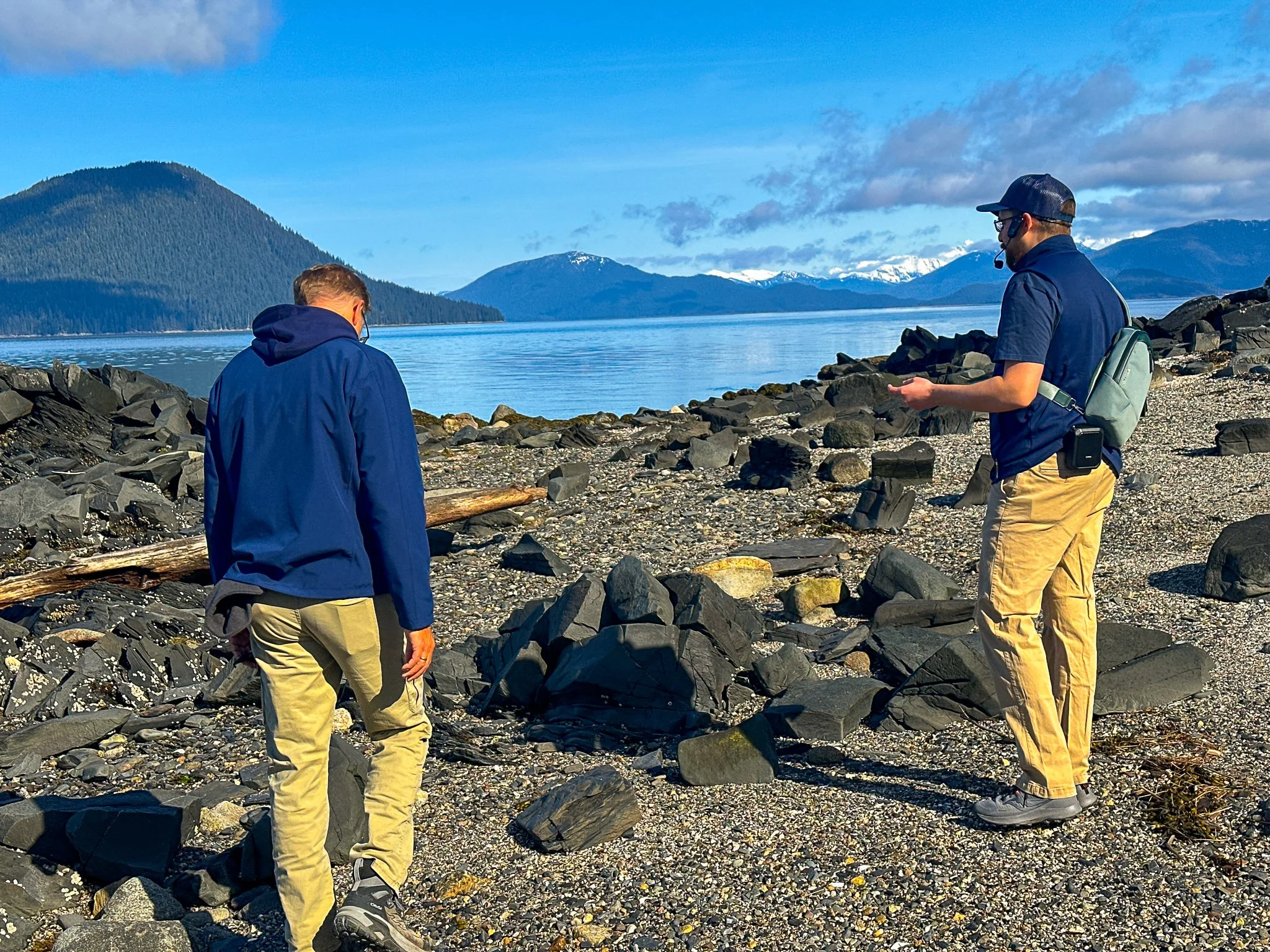
More of the beach is exposed at low tide. Check the tide before heading over.
LEAVE THEM UNTOUCHED
While the petroglyph replicas on the deck are available for rubbings, extensive research has shown that constant rubbing of the original petroglyphs accelerates their deterioration. We ask that you respect these ancient carvings by leaving them untouched, allowing future generations to appreciate this glimpse into the past.
Check the tide before heading over; more of the beach is exposed at low tide.
Never trace, chalk, scrape, clean or alter a petroglyph.
Use the replicas on the viewing deck for rubbings.
Avoid stepping on carvings.
Leave rocks where you find them.
Respect neighboring private property.
Watch your footing as the tide changes.
Petroglyphs and associated site components are protected under Federal and State of Alaska Antiquities Laws.
NEAR BY ATTRACTIONS
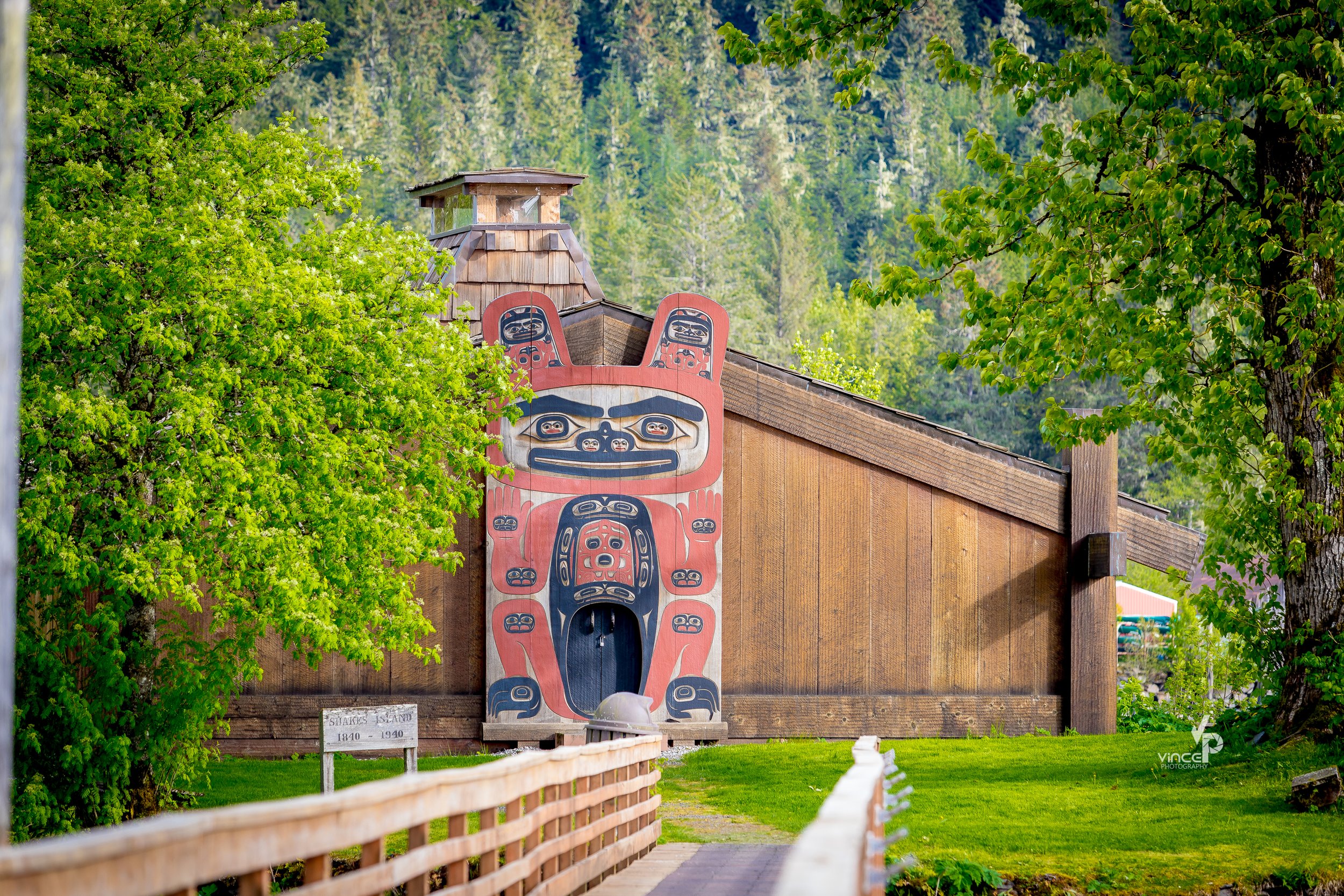
CHIEF SHAKES TRIBAL HOUSE
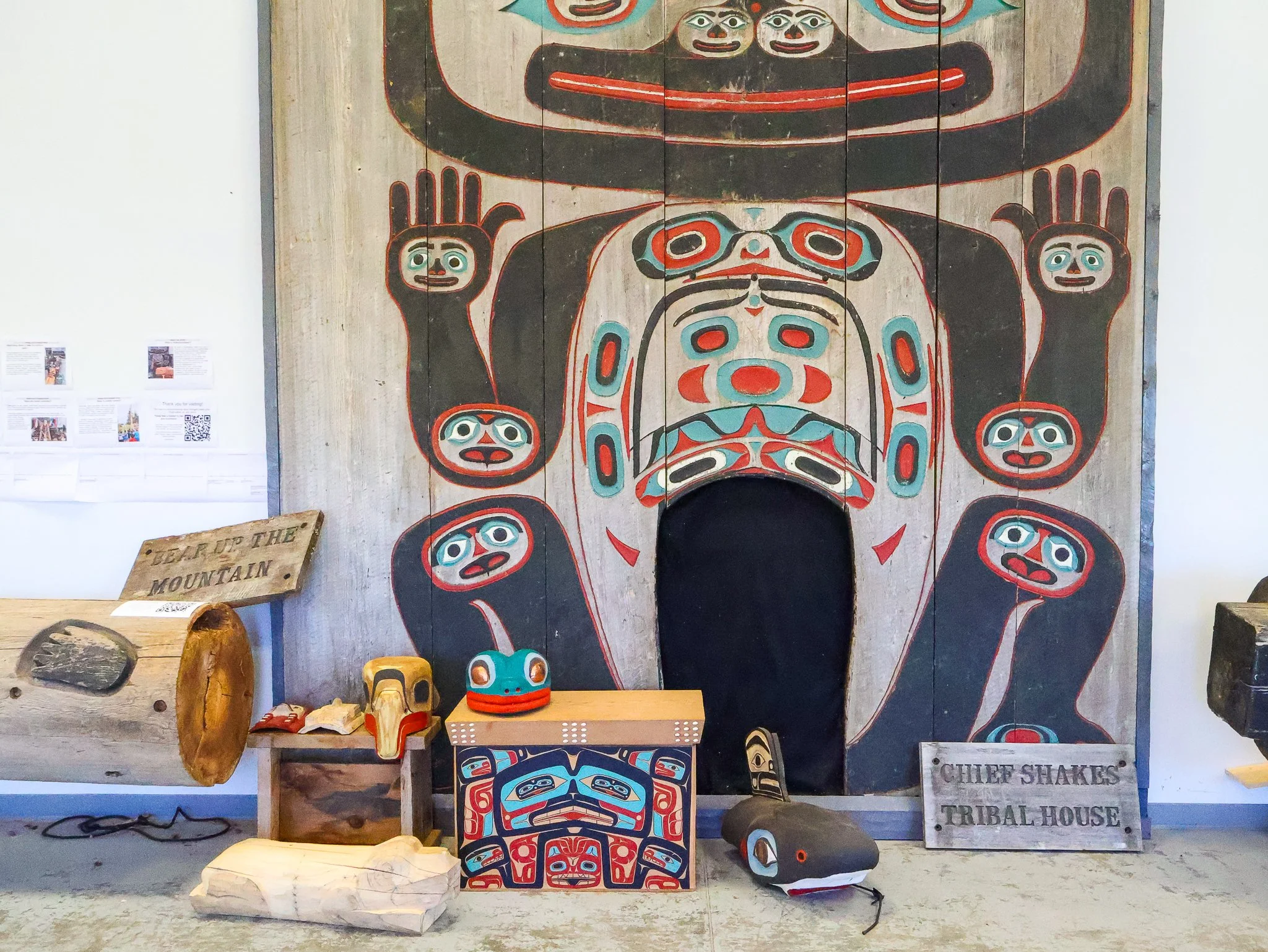
CULTURAL CENTER & CARVING SHED
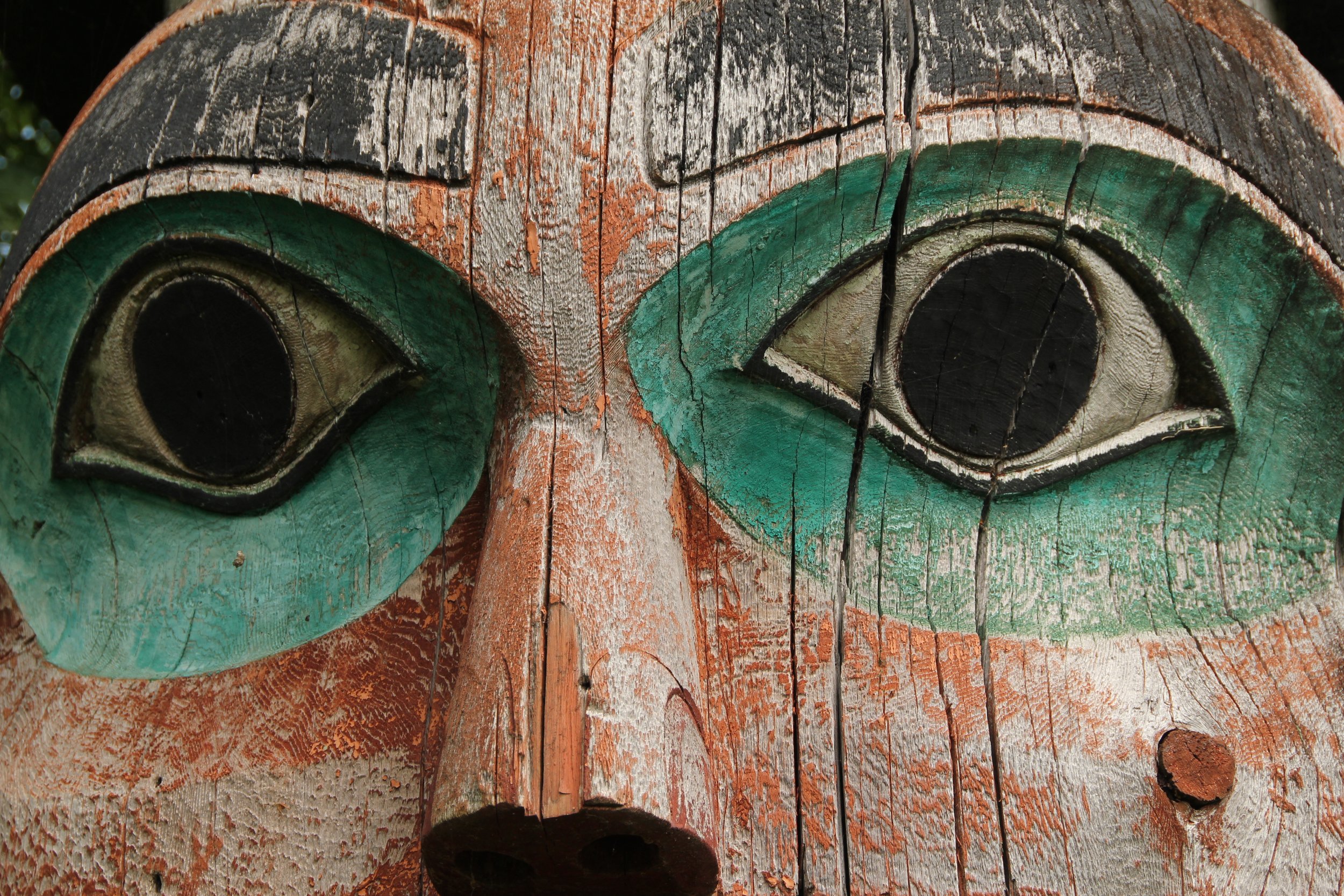
TOTEM PARK
PLAN AROUND IT.
Pick a season, then figure out how to get here and where to stay.